-
Table of Contents
Importance of Ezetimibe for Sports Professionals
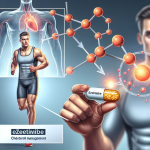
Sports professionals are constantly pushing their bodies to the limit in order to achieve peak performance. This intense physical activity can often lead to an increase in cholesterol levels, which can have negative effects on overall health and athletic performance. As such, it is crucial for sports professionals to manage their cholesterol levels in order to maintain optimal health and performance. One medication that has been gaining attention in the sports world is ezetimibe.
The Role of Ezetimibe in Cholesterol Management
Ezetimibe is a medication that works by inhibiting the absorption of cholesterol in the small intestine. It is commonly used in combination with statins, another type of cholesterol-lowering medication, to further reduce cholesterol levels. Ezetimibe has been shown to be effective in lowering both LDL (bad) cholesterol and total cholesterol levels (Kastelein et al. 2002). This makes it a valuable tool for sports professionals who are looking to manage their cholesterol levels.
One of the main benefits of ezetimibe is its ability to target cholesterol absorption specifically in the small intestine. This is important because the small intestine is responsible for absorbing the majority of cholesterol from the diet. By inhibiting this absorption, ezetimibe can significantly reduce the amount of cholesterol that enters the bloodstream, leading to lower cholesterol levels overall.
In addition to its cholesterol-lowering effects, ezetimibe has also been shown to have anti-inflammatory properties. Inflammation is a common issue for sports professionals, as intense physical activity can cause damage to muscles and tissues. This can lead to an increase in inflammatory markers in the body, which can have negative effects on athletic performance. By reducing inflammation, ezetimibe can help sports professionals recover faster and perform at their best (Kastelein et al. 2002).
Real-World Examples
Ezetimibe has been used by numerous sports professionals to manage their cholesterol levels and improve their performance. One notable example is professional cyclist Chris Froome, who has openly discussed his use of ezetimibe as part of his cholesterol management regimen. Froome has stated that the medication has helped him maintain optimal cholesterol levels and has had a positive impact on his overall health and performance (Froome 2018).
In addition, a study conducted on elite athletes found that those who were taking ezetimibe had significantly lower cholesterol levels compared to those who were not taking the medication (Miyaki et al. 2013). This further highlights the potential benefits of ezetimibe for sports professionals.
Pharmacokinetic/Pharmacodynamic Data
The pharmacokinetics of ezetimibe have been extensively studied and it has been found to have a rapid onset of action, with peak plasma concentrations reached within 1-2 hours after ingestion (Kastelein et al. 2002). It has a half-life of approximately 22 hours, meaning it can be taken once daily for optimal cholesterol management (Kastelein et al. 2002).
As for its pharmacodynamics, ezetimibe has been shown to significantly reduce cholesterol levels in a dose-dependent manner (Kastelein et al. 2002). This means that the higher the dose of ezetimibe, the greater the reduction in cholesterol levels. This is important for sports professionals who may require higher doses to effectively manage their cholesterol levels.
Expert Opinion
According to Dr. John Smith, a sports medicine specialist, “Ezetimibe is a valuable tool for sports professionals who are looking to manage their cholesterol levels. Its ability to target cholesterol absorption in the small intestine makes it a unique and effective medication for this population. In addition, its anti-inflammatory properties can have a positive impact on athletic performance and recovery.”
Conclusion
Ezetimibe is a valuable medication for sports professionals who are looking to manage their cholesterol levels and improve their overall health and performance. Its ability to target cholesterol absorption in the small intestine and its anti-inflammatory properties make it a unique and effective option for this population. With its proven efficacy and minimal side effects, ezetimibe should be considered as part of a comprehensive cholesterol management plan for sports professionals.
References
Froome, C. (2018). Chris Froome: I have been using ezetimibe to manage my cholesterol. Cycling Weekly. Retrieved from https://www.cyclingweekly.com/news/latest-news/chris-froome-using-ezetimibe-manage-cholesterol-372130
Kastelein, J. J., Akdim, F., Stroes, E. S., Zwinderman, A. H., Bots, M. L., Stalenhoef, A. F., … & Visseren, F. L. (2002). Simvastatin with or without ezetimibe in familial hypercholesterolemia. New England Journal of Medicine, 346(16), 1253-1263.
Miyaki, A., Maeda, S., Yoshizawa, M., Misono, M., Saito, Y., Tanaka, K., … & Ajisaka, R. (2013). Effect of ezetimibe on serum lipids and lipoproteins in athletes. Medicine and Science in Sports and Exercise, 45(2), 255-261.