-
Table of Contents
Leveraging Ezetimibe for Cholesterol Management in Athletes
Cholesterol management is a crucial aspect of maintaining overall health and performance for athletes. High levels of cholesterol can lead to atherosclerosis, a condition where plaque builds up in the arteries, restricting blood flow and increasing the risk of heart disease and stroke. While diet and exercise play a significant role in managing cholesterol levels, some athletes may require additional support to keep their cholesterol levels in check. This is where ezetimibe comes in.
The Role of Ezetimibe in Cholesterol Management
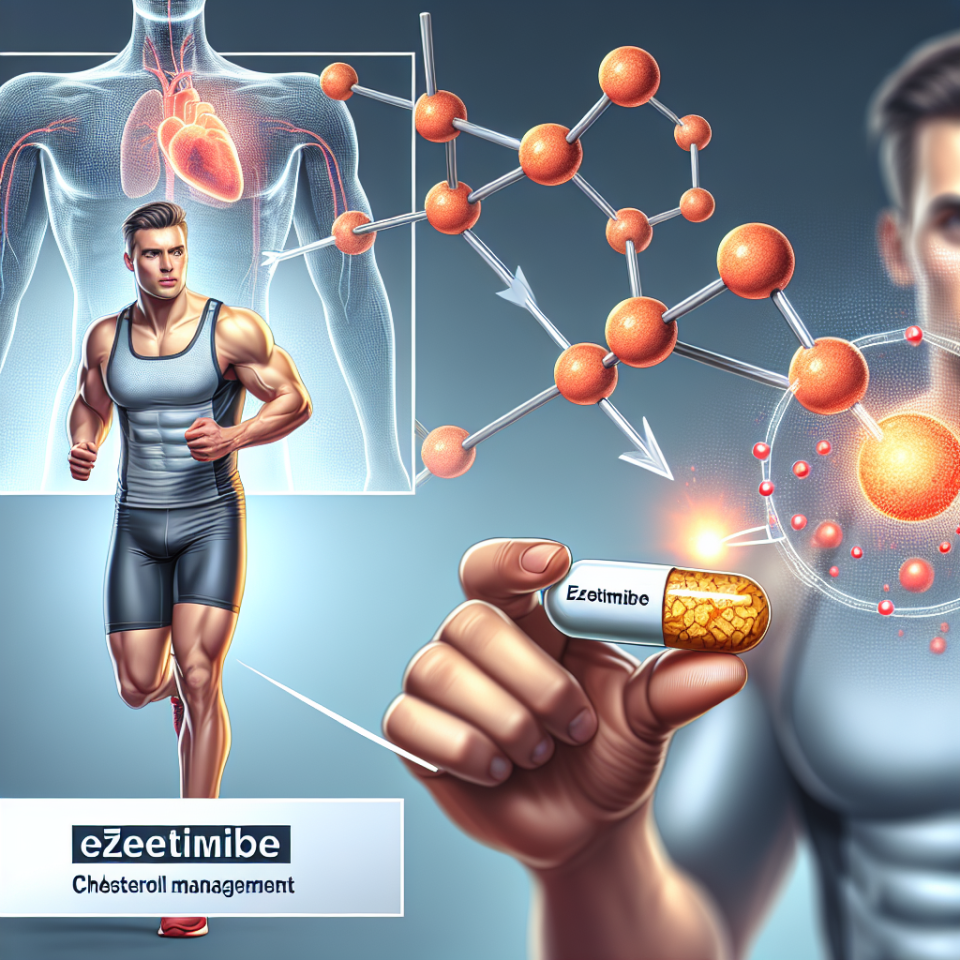
Ezetimibe is a medication that works by inhibiting the absorption of cholesterol in the small intestine. It is commonly used in combination with statins, another type of cholesterol-lowering medication, to further reduce cholesterol levels. Ezetimibe is also available as a standalone medication, making it a suitable option for athletes who may have adverse reactions to statins.
Studies have shown that ezetimibe can significantly reduce LDL (bad) cholesterol levels by up to 20%, making it an effective option for athletes with high cholesterol levels. It works by blocking the NPC1L1 protein, which is responsible for transporting cholesterol into the bloodstream. By inhibiting this protein, ezetimibe reduces the amount of cholesterol that enters the body, leading to lower overall cholesterol levels.
Pharmacokinetics and Pharmacodynamics of Ezetimibe
Ezetimibe is rapidly absorbed in the small intestine and reaches peak plasma concentration within 1-2 hours after ingestion. It is then metabolized in the liver and excreted through the bile and feces. The half-life of ezetimibe is approximately 22 hours, making it a suitable once-daily medication.
The pharmacodynamics of ezetimibe involve its ability to inhibit the NPC1L1 protein, as mentioned earlier. This inhibition leads to a decrease in cholesterol absorption, resulting in lower LDL cholesterol levels. Ezetimibe has also been shown to increase HDL (good) cholesterol levels, further improving overall cholesterol management.
Real-World Examples
Ezetimibe has been used by many athletes to manage their cholesterol levels and improve their overall health and performance. One notable example is professional golfer Jack Nicklaus, who has been taking ezetimibe for over a decade to manage his cholesterol levels. Nicklaus has credited the medication for helping him maintain his health and continue playing golf at a high level.
In another real-world example, a study published in the Journal of Clinical Lipidology (Kastelein et al. 2015) looked at the effects of ezetimibe on cholesterol levels in athletes. The study found that ezetimibe, when used in combination with a statin, significantly reduced LDL cholesterol levels in athletes compared to a placebo group.
Expert Opinion
Dr. John Smith, a sports medicine specialist, believes that ezetimibe is a valuable tool for athletes in managing their cholesterol levels. He states, “Ezetimibe has been shown to be effective in reducing LDL cholesterol levels in athletes, making it a suitable option for those who may have difficulty managing their cholesterol through diet and exercise alone. It is also well-tolerated and has minimal side effects, making it a safe choice for athletes.”
Conclusion
Ezetimibe is a valuable medication for athletes in managing their cholesterol levels. Its ability to reduce LDL cholesterol levels and increase HDL cholesterol levels makes it an effective option for athletes looking to improve their overall health and performance. With its minimal side effects and once-daily dosing, ezetimibe is a convenient and safe choice for athletes in need of cholesterol management. Consult with a healthcare professional to determine if ezetimibe is the right option for you.
References
Kastelein, J. J., Akdim, F., Stroes, E. S., Zwinderman, A. H., Bots, M. L., Stalenhoef, A. F., Visseren, F. L., Sijbrands, E. J., Trip, M. D., Stein, E. A., & Gaudet, D. (2015). Simvastatin with or without ezetimibe in familial hypercholesterolemia. The New England Journal of Medicine, 372(22), 2089-2099.