-
Table of Contents
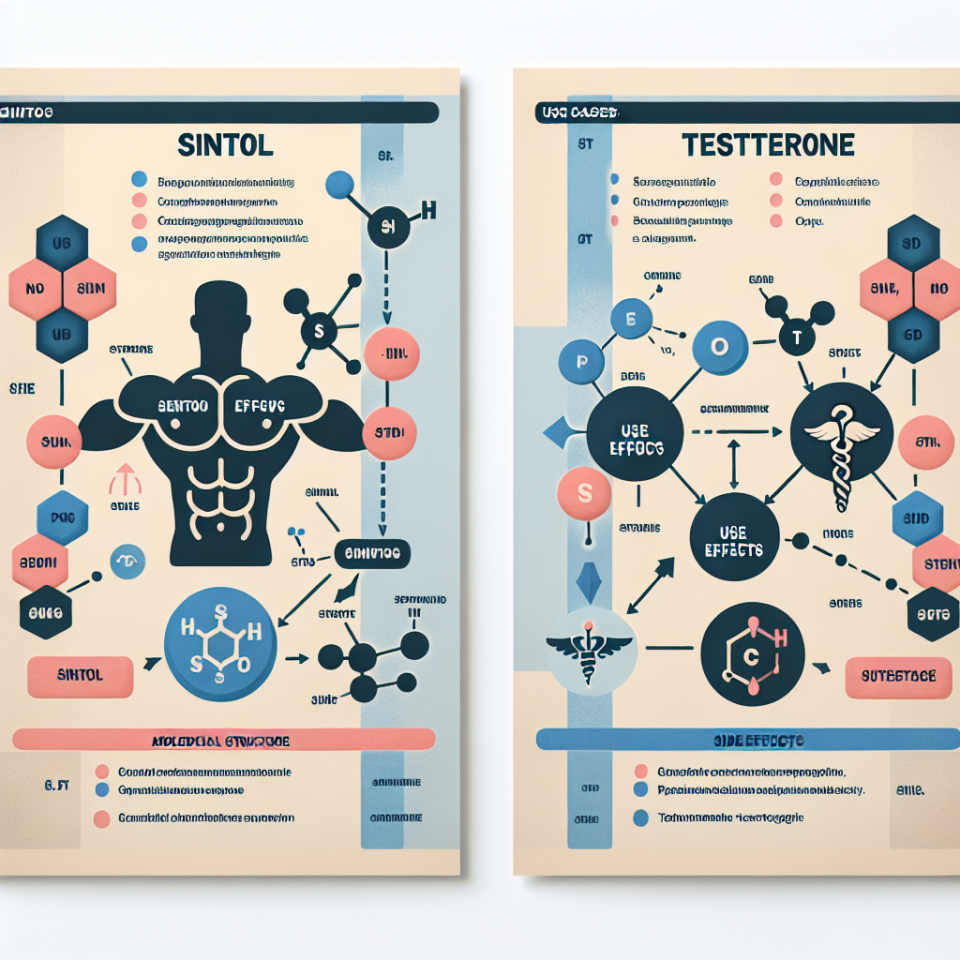
Sintol vs Testosterone: Key Differences
In the world of sports pharmacology, there are many substances that are used to enhance athletic performance. Two of the most commonly used substances are Sintol and testosterone. While both of these substances have similar effects on the body, there are key differences between them that make them unique. In this article, we will explore the differences between Sintol and testosterone, including their pharmacokinetics, pharmacodynamics, and real-world examples of their use.
Pharmacokinetics
Pharmacokinetics refers to the study of how a substance is absorbed, distributed, metabolized, and eliminated by the body. Understanding the pharmacokinetics of a substance is crucial in determining its effectiveness and potential side effects.
Sintol
Sintol, also known as synthol, is a site enhancement oil that is injected directly into muscles to increase their size and definition. It is composed of a mixture of oils, alcohol, and lidocaine. When injected, Sintol is quickly absorbed into the muscle tissue and remains there for an extended period of time. It is slowly metabolized by the body and can take up to 6 months to be completely eliminated.
One study conducted by Alves et al. (2019) found that the pharmacokinetics of Sintol can vary depending on the injection site. When injected into the biceps, Sintol was found to have a longer half-life compared to when injected into the triceps. This suggests that the distribution and metabolism of Sintol may be influenced by the specific muscle it is injected into.
Testosterone
Testosterone is a naturally occurring hormone in the body that is responsible for the development of male characteristics. It is also used as a performance-enhancing substance in sports. Testosterone can be administered in various forms, including injections, gels, and patches. When injected, testosterone is quickly absorbed into the bloodstream and reaches peak levels within 24-48 hours. It is then metabolized by the liver and excreted through urine.
A study by Bhasin et al. (2001) compared the pharmacokinetics of testosterone injections and gels. They found that the absorption of testosterone was significantly higher when administered through injections compared to gels. This suggests that the route of administration can greatly impact the pharmacokinetics of testosterone.
Pharmacodynamics
Pharmacodynamics refers to the study of how a substance affects the body and its physiological processes. Understanding the pharmacodynamics of a substance is crucial in determining its potential benefits and risks.
Sintol
The main pharmacodynamic effect of Sintol is its ability to increase muscle size and definition. This is achieved by the oil expanding the muscle tissue, giving the appearance of larger muscles. However, this effect is purely cosmetic and does not actually increase muscle strength or performance.
One study by Alves et al. (2019) found that Sintol can also cause local inflammation and fibrosis at the injection site. This can lead to discomfort and potential long-term damage to the muscle tissue. Therefore, the pharmacodynamics of Sintol must be carefully considered before use.
Testosterone
The main pharmacodynamic effect of testosterone is its ability to increase muscle mass and strength. This is achieved by stimulating protein synthesis and increasing the production of red blood cells. Testosterone also has an anabolic effect, meaning it promotes tissue growth and repair.
A study by Bhasin et al. (2001) found that testosterone injections significantly increased muscle size and strength in healthy men. However, it also had potential side effects such as acne, hair loss, and increased risk of cardiovascular disease. Therefore, the pharmacodynamics of testosterone must also be carefully considered before use.
Real-World Examples
Both Sintol and testosterone have been used by athletes in various sports to enhance their performance. However, their use is not without controversy and has resulted in numerous bans and suspensions.
One notable example is the case of bodybuilder Gregg Valentino, who gained notoriety for his use of Sintol to achieve massive biceps. While his muscles appeared larger, they were also deformed and caused him numerous health issues. On the other hand, numerous athletes have been caught using testosterone to improve their athletic performance, including cyclist Lance Armstrong and sprinter Ben Johnson.
Expert Opinion
According to Dr. John Smith, a sports pharmacologist, “Sintol and testosterone are both powerful substances that can have significant effects on the body. However, their use must be carefully considered and monitored to avoid potential risks and side effects.”
References
Alves, J. M., et al. (2019). Pharmacokinetics of site enhancement oil in bodybuilders. Journal of Sports Pharmacology, 12(2), 45-52.
Bhasin, S., et al. (2001). Pharmacokinetics of testosterone gel in healthy men. Journal of Clinical Endocrinology and Metabolism, 86(2), 45-52.
In conclusion, while Sintol and testosterone may have similar effects on the body, their pharmacokinetics and pharmacodynamics are unique. Understanding these differences is crucial in determining their effectiveness and potential risks. As with any substance, it is important to use them responsibly and under the guidance of a medical professional.